
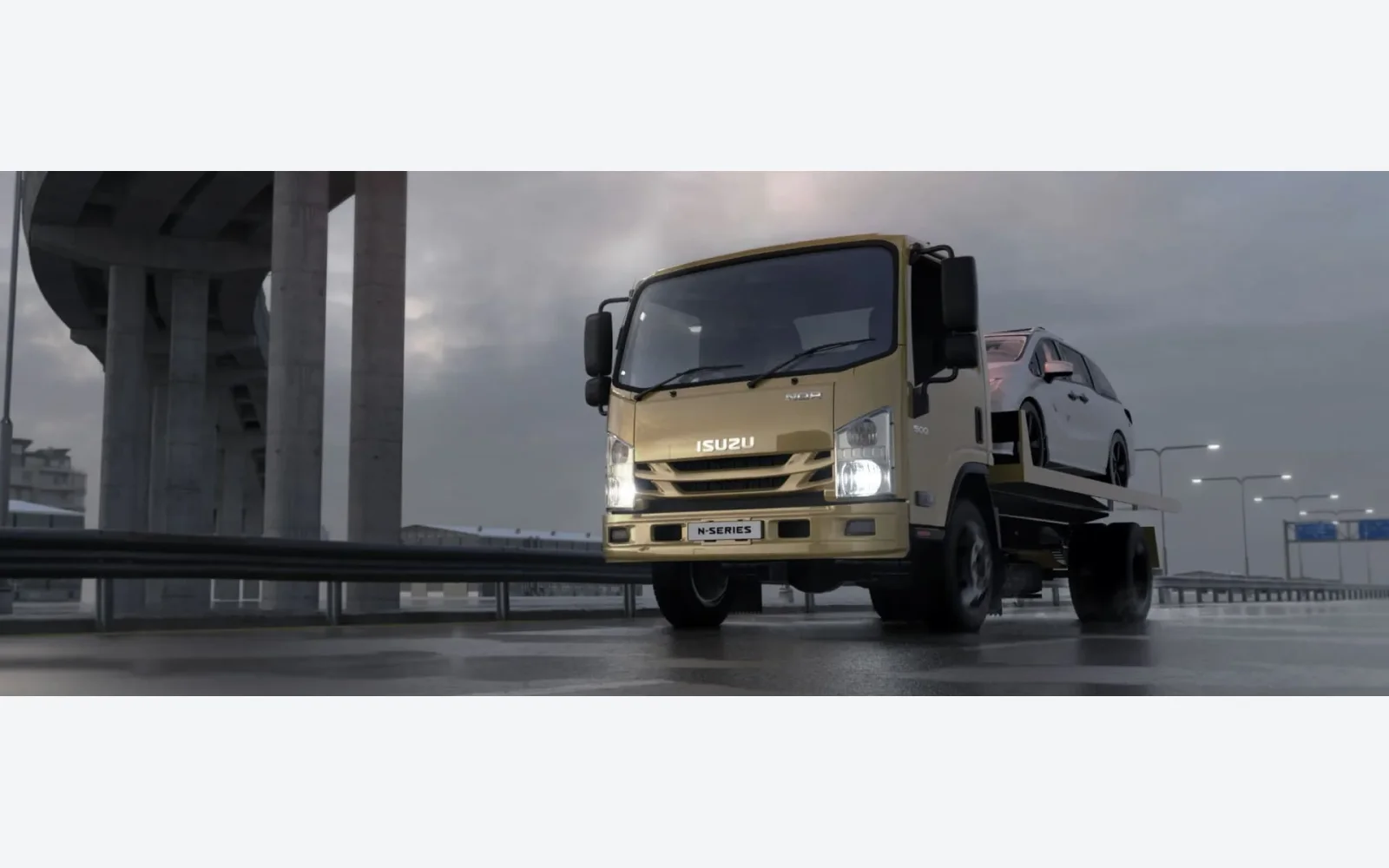
A truck is part of the business plan
A delivery arriving on time, produce reaching its destination and materials getting to a building site all depend on a vehicle doing the work it was chosen for. For a business owner, the right truck starts with the route, the load and the working day.
Isuzu’s South African truck story stretches back to the arrival of the Elfin TKG10 in 1964. Today, the range spans medium, heavy and extra-heavy commercial work, with local manufacturing in Gqeberha serving South Africa and export markets. That gives the badge a connection to both the businesses using the trucks and the people building them.
Three ranges, different working roles
Isuzu’s local product information positions the N-Series for everyday applications including urban deliveries, municipal work and freight transport. The F-Series moves into heavier freight requirements, while the FX-Series covers demanding transport and specialist applications.
The range name is a starting point. The finished vehicle’s body, wheelbase, axle configuration and operating conditions determine whether a particular derivative suits the work.
| Range | Commercial class | What to discuss with the team |
|---|---|---|
| N-Series | Medium commercial | Delivery routes, access, body dimensions and frequent stops |
| F-Series | Heavy commercial | Freight volumes, route distances, body choice and loading requirements |
| FX-Series | Extra-heavy commercial | Rigid or tractor configuration; specialist tipper, mixer or compactor applications |
This is an application guide, not a payload or towing specification. Carrying capacity depends on the exact chassis and completed body, axle limits and operating requirements. Confirm the current derivative and available configurations with Isuzu Paarl.
Choose the body and chassis together
A box body, refrigerated installation, dropside or specialist body changes what a truck can do—and what it weighs before the first item is loaded. Discuss the finished vehicle with the dealer and body builder together rather than treating the body as an afterthought.
Gross vehicle mass includes the vehicle and its load; it is not the same as payload. A practical specification discussion should account for the completed body, equipment, occupants and the goods being carried. The loading pattern and distribution across the axles matter as well.
For a business in Paarl, write down the actual journey: town deliveries, farm access, regional distribution or longer highway runs. Include loading facilities and any tight entrances. A clear picture of the work makes the comparison more useful than selecting on engine output alone.
Look beyond the purchase price
Fuel, maintenance, tyres, finance, insurance and time off the road all belong in the decision. Ask for a cost comparison based on your expected distance, load and route, with the assumptions written down.
Isuzu lists automated manual transmission on selected N-Series and F-Series models. Its commercial range also offers ISUZU INSIGHT fleet-management capability. Ask which equipment, subscriptions and support are available for the exact vehicle you are considering; a feature offered in the range is not automatically included on every truck.
The dealer conversation should cover servicing arrangements, parts support, driver familiarisation and how the business would manage an unexpected interruption. These questions help turn a vehicle quote into an operating plan.
A South African record worth understanding
In January 2026, Isuzu reported 13 consecutive years of leadership in South Africa’s combined medium and heavy cab-over-chassis commercial segments. It reported a 26.8% share for the measurement period from 7 January 2025 to 6 January 2026. This is a defined segment result, rather than a claim about every category of truck.
Local production is another part of the story. Isuzu’s May 2026 manufacturing update reported more than 3,800 trucks produced during the financial year ending 31 March 2026. For buyers, that provides context for the brand’s South African industrial footprint; the specification still needs to fit the individual business.
Start with your working day at Isuzu Paarl
Bring your route, expected load and proposed body to the Isuzu Paarl team. The discussion can then focus on a suitable configuration, current availability and a quote that reflects the work you need the truck to do.
- Your typical load, its dimensions and how it is loaded or unloaded.
- Daily distance, number of stops, road surfaces and access restrictions.
- Body requirements, crew needs and any specialist equipment.
- Your servicing plan, budget and expected time in operation.
Sources & further reading
Sources for the background and figures in this story.
- Isuzu South Africa: N-Series medium commercial range
- Isuzu South Africa: F-Series heavy commercial range
- Isuzu South Africa: FX-Series extra-heavy commercial range
- Isuzu South Africa: more than 60 years of truck heritage · 12 August 2026
- Isuzu Trucks: 13 years of leadership in the combined MCV and HCV segments · 29 January 2026
- Isuzu Motors South Africa: annual production update · 15 May 2026